Induction of labor (IOL) refers to the artificial initiation of uterine contractions after the age of viability with the aim of achieving vaginal delivery.1 This common obstetric intervention is indicated when the fetomaternal risks of continuing the pregnancy outweigh those of delivery.1,2 According to the World Health Organization, the global rate of IOL is approximately 10%, but varies according to population distribution, economic development, and accessibility to healthcare. For example, reported IOL rates were 6% in Nigeria, 15% in Oman, and 20% in the UK.1–3
Globally, IOL rates have been on the rise, likely due to improved antepartum fetal surveillance, access to quality healthcare, and evidence suggesting that IOL significantly improved fetomaternal outcomes.1,4 In 2018, the highly influential ARRIVE randomized controlled trial (RCT) in the US demonstrated that amoung low-risk nulliparous women, IOL at 39 weeks significantly reduced cesarean delivery (CD) and neonatal morbidities.4 This important finding led to a renewal of the American College of Obstetricians and Gynecologists guidelines, which now support non-medically indicated induction at 39 weeks for nulliparous women as a reasonable option.5 However, the findings had limited validity outside the US. There was also a possible unmasked ascertainment bias. Therefore, large-scale observational studies in diverse populations and settings were recommended.5,6
This recommendation was partly met by a 2018 meta-analysis of 30 RCTs, involving more than 12 000 women from 13 countries, which found that IOL after 37 weeks of gestation was associated with lower outcome risks (fewer perinatal deaths, fewer neonatal intensive care unit (NICU) admissions, lower incidence of low Apgar score, and fewer CDs) compared to expectant management. However, the rate of operative vaginal deliveries (OVD) was higher.7 The authors recommended further studies to determine optimal timing of IOL, incorporating maternal risk profiles and preferences.7
In contrast, other studies have associated a higher risk of CD and maternal complications, including uterine hyperstimulation, uterine rupture, postpartum hemorrhage (PPH), maternal morbidity and mortality with IOL.1,8 Associated fetal complications included fetal distress, low neonatal appearance, pulse, grimace, activity and respiration (Apgar) scores, neonatal jaundice, and NICU admission.9 Factors associated with these complications were participant characteristics, IOL protocol, and the quality of peripartum and neonatal care. This suggests that the incidence of these complications may vary between and within countries.1,8,9
In Oman, only two studies have examined IOL, each focusing on a specific subgroup of pregnant women; those with previous CD and grand multiparas rather than the general obstetric population.3,10 In addition, the recent proliferation of Internet-savvy e-patients in Oman calls for a local study to aid clinical decision making on IOL as against the evidence they read on the internet from other countries.11 Our study compared the fetomaternal outcomes in women who underwent IOL between June and November 2024 to those who labored spontaneously. To our knowledge, this is the first study on IOL that also assessed the duration of labor stages, admission to delivery interval, and duration of hospital stay among the general obstetric population.
Methods
This retrospective comparative study was conducted in the Department of Obstetrics and Gynecology, Armed Forces Hospital, Muscat, Oman, between June and November 2024. Ethical approval was obtained from the hospital’s Ethics committee (Ref. AFMS-MREC 112/2024 dated 14 February 2024). While informed consent was not required due to the retrospective nature of the study, participant data were maintained confidential and secure.
Our hospital conducted 974 deliveries between June and November 2024, including 177 (18.2%) induced deliveries. We used purposive sampling to select the study participants. Women with singleton fetuses in cephalic presentation between 37 weeks and 41 weeks + 6 days who were planned for vaginal delivery were included in the study. Exclusion criteria were known congenital abnormalities that could lead to intrapartum fetal heart, prelabor rupture of membranes, abnormal lie, and abnormal admission cardiotocography (CTG).
Participants were divided into two groups: (1) the spontaneous group comprising women who had spontaneous labor within the same 24-hour shift and (2) the IOL group, an equal number of women who underwent IOL and had close characteristics with the spontaneous group in age, parity, and gestational age.
Induction methods included vaginal prostaglandin E2 pessaries (10 mg) inserted every 4–6 hours or the use of a cervical balloon. Pessaries were removed upon the onset of active labor, defined as cervical dilatation of 4 cm, uterine hyperstimulation, an abnormal fetal heart rate pattern on CTG, or if the pessaries had been in place for 24 hours. If contractions were inadequate during the active phase, oxytocin infusion was commenced.
Information, including maternal demography, obstetric history, method of IOL, duration of active labor, admission to delivery interval, and total duration of hospital stay, were extracted from their antenatal, intrapartum, and postpartum electronic records. The duration of active labor was defined as the time from the commencement of progressive painful uterine contractions (at least three painful contractions in 10 minutes) till the time of delivery. Non-progress of labor was diagnosed upon exceeding the time limits on the World Health Organization Labor Care Guide, despite adequate contractions and/or maximum oxytocic and fetal distress (defined as persistent pathological CTG despite intrauterine resuscitation).12
Maternal outcomes included the mode of delivery, indications for operative delivery, clinically estimated blood loss (EBL), peripartum complications (PPH) (EBL > 500 mL in vaginal delivery and > 1000 mL in cesarean section), perineal laceration (second degree perineal tear or more), blood transfusion, hysterectomy, uterine rupture, and shoulder dystocia.
Fetal outcomes were birth weight, 1st and 5th minute Apgar scores, NICU admission, and neonatal status at discharge. The data were collated and analyzed using SPSS Statistics (IBM Corp. Release 2022. IBM SPSS Statistics for Windows, Version 29.0 Armonk, NY: IBM Corp.). The chi-square test was used to compare categorical variables. Continuous variables were analyzed using an independent t-test for normally distributed data and the Mann–Whitney U test for non-normally distributed data. Statistical significance was set at p < 0.05 with a 95% CI.
Results
The study included 260 pregnant women with singleton pregnancies planned for vaginal delivery divided into two groups: 130 who underwent IOL and 130 who had spontaneous labor [Table 1]. The mean ages of the groups were similar: 32.5 ± 6.2 years in the IOL group and 30.9 ± 5.8 years in the spontaneous labor group. Nulliparous women were significantly more common in the IOL group (32.3% vs. 18.5%, p = 0.048). Women in the IOL group were significantly more likely to deliver before full term (37–38 + 6 weeks), whereas spontaneous labor occurred more frequently at full term (39–40 + 6 weeks) (p = 0.001). Fewer women in the IOL group had a previous CD (17.7% vs. 22.3%, p = 0.031).
Table 1: Maternal demographic and obstetric characteristics by labor onset type (N = 260).
|
Maternal age, years
|
|
|
|
0.121
|
|
20–29
|
40 (30.9)
|
54 (41.5)
|
94 (36.2)
|
|
|
30–39
|
76 (58.5)
|
69 (53.1)
|
145 (55.8)
|
|
|
40–49
|
14 (10.9)
|
7 (5.4)
|
21 (8.1)
|
|
|
Mean ± SD
|
32.5 ± 6.2
|
31.0 ± 5.8
|
31.7 ± 6.0
|
|
|
Parity
|
|
|
|
|
|
0
|
42 (32.3)
|
24 (18.5)
|
66 (25.4)
|
0.048*
|
|
1–4
|
72 (55.4)
|
93 (71.5)
|
165 (63.5)
|
|
|
≥ 5
|
16 (12.3)
|
13 (10.0)
|
29 (11.2)
|
|
|
Mean ± SD
|
2.2 ± 2.0
|
2.4 ± 1.7
|
2.3 ± 1.8
|
|
|
Gestational Age, weeks
|
|
|
|
|
|
37–38 + 6 days
|
82 (63.1)
|
51 (39.2)
|
133 (51.2)
|
0.001*
|
|
39–40 + 6 days
|
42 (32.3)
|
76 (58.5)
|
118 (45.4)
|
|
|
41–41+ 6 days
|
6 (4.6)
|
3 (2.3)
|
9 (3.5)
|
|
|
Mean
|
38 weeks + 5 days
|
39 weeks + 1 day
|
39 weeks
|
|
|
Previous CD
|
23 (17.8)
|
29 (22.3)
|
52 (20.0)
|
0.031*
|
|
Indications for IOL
|
|
|
|
|
|
GDM/DM
|
76 (58.5)
|
|
|
|
|
IUGR
|
11 (8.5)
|
|
|
|
|
Hypertension
|
10 (7.8)
|
|
|
|
|
Postdatism
|
6 (4.6)
|
|
|
|
|
Reduced fetal movement
|
5 (3.9)
|
|
|
|
|
Oligohydramnios
|
4 (3.1)
|
|
|
|
|
Others**
|
18 (13.9)
|
|
|
|
|
Methods of IOL
|
|
|
|
|
|
PGE2 pessary
|
68 (52.3)
|
|
|
|
|
PGE2 gel
|
38 (29.2)
|
|
|
|
|
Cervical balloon
|
20 (15.4)
|
|
|
|
|
Gel + Balloon
|
3 (2.3)
|
|
|
|
IOL: induction of labor; CD: cesarean delivery; GDM/DM: gestational diabetes mellitus/diabetes mellitus; IUGR: intrauterine growth restriction; PGE2: prostaglandin E2; *Significant; **Macrosomia, cardiac disorder in pregnancy, maternal request, polyhydramnios, gestational thrombocytopenia.
The commonest indication for IOL was gestational diabetes mellitus or diabetes mellitus (GDM/DM) (58.5%), followed by intrauterine growth restriction (8.5%). The commonest method of IOL was prostaglandin pessary (52.3%), followed by prostaglandin E2 gel (29.2%).
Table 2 compares labor outcomes between the study groups. More women had operative delivery in the IOL group, 26.2% vs. 14.6% for CD and 10.0% vs. 6.9% for OVD (p = 0.031). The commonest indication for CD was fetal distress, accounting for 49.1% of all cases. In addition, cesareans due to poor progress in labor were about four times more common in the IOL group than in the spontaneous labor group (38.2% vs. 10.5%). As with CD, the leading indication for OVD was also fetal distress (81.8%), higher among mothers who had IOL (92.3% vs. 66.7%). There were no significant differences in mean EBL, incidence of perineal laceration, or PPH between the study groups. The only woman who received transfusion had spontaneous labor. None of the participants in the study experienced complications such as shoulder dystocia, uterine rupture, or the need for hysterectomy.
Table 2: Maternal and fetal outcomes (N = 260).
|
Mode of delivery
|
|
|
|
0.031*
|
|
Vaginal delivery
|
83 (63.9)
|
102 (78.5)
|
185 (71.2)
|
|
|
Cesarean delivery (CD)
|
34 (26.2)
|
19 (14.6)
|
53 (20.4)
|
|
|
Indications for CD
|
|
|
|
|
|
Fetal distress
|
14 (41.2)
|
12 (63.2)
|
26 (49.1)
|
|
|
Poor progress of labor
|
13 (38.2)
|
2 (10.5)
|
15 (28.3)
|
|
|
Maternal request
|
4 (11.9)
|
2 (10.5)
|
6 (11.3)
|
|
|
Scar tenderness
|
3 (8.8)
|
2 (10.5)
|
5 (9.4)
|
|
|
Antepartum hemorrhage
|
0 (0.0)
|
1 (5.3)
|
1 (1.9)
|
|
|
Operative vaginal delivery (OVD)
|
13 (10.0)
|
9 (6.9)
|
22 (8.5)
|
|
|
Indications for OVD
|
|
|
|
|
|
Fetal distress
|
12 (92.3)
|
6 (66.7)
|
18 (81.8)
|
|
|
Maternal exhaustion
|
1 (7.7)
|
1 (11.1)
|
2 (9.1)
|
|
|
Medical disorders
|
0 (0.0)
|
1 (11.1)
|
1 (4.6)
|
|
|
No progress in 2nd stage
|
0 (0.0)
|
1 (11.1)
|
1 (4.6)
|
|
|
Estimated blood loss, mL
|
283.4 ± 357.2
|
266.4 ± 244.4
|
274.9 ± 300.9
|
0.725
|
|
Maternal outcomes
|
|
|
|
|
|
Perineal laceration (2nd degree)
|
15 (11.5)
|
19 (14.6)
|
34 (13.1)
|
0.462
|
|
Blood transfusion
|
0 (0.0)
|
1 (0.9)
|
1 (0.4)
|
|
|
Postpartum hemorrhage
|
4 (3.1)
|
6 (4.6)
|
10 (4.0)
|
0.519
|
|
Hysterectomy
|
0 (0.0)
|
0 (0.0)
|
|
|
|
Uterine rupture
|
0 (0.0)
|
0 (0.0)
|
|
|
|
Shoulder dystocia
|
0 (0.0)
|
0 (0.0)
|
|
|
|
Birth weight, g
|
|
|
|
0.913
|
|
< 2500
|
15 (11.5)
|
13 (10.0)
|
28 (10.9)
|
|
|
2500–3500
|
90 (69.2)
|
93 (71.5)
|
183 (70.5)
|
|
|
> 3500
|
25 (19.2)
|
24 (18.5)
|
49 (18.8)
|
|
|
1st minute Apgar score
|
|
|
|
0.953
|
|
≤ 3
|
2 (1.5)
|
1 (0.8)
|
3 (1.2)
|
|
|
4–5
|
1 (0.8)
|
2 (1.5)
|
3 (1.2)
|
|
|
6
|
2 (1.5)
|
2 (1.5)
|
4 (1.5)
|
|
|
≥ 7
|
125 (96.2)
|
125 (96.2)
|
250 (96.2)
|
|
|
5th minute Apgar score
|
|
|
|
0 .478Y
|
|
< 7
|
1 (0.9)
|
1 (0.9)
|
2 (0.9)
|
|
|
≥ 7
|
129 (99.2)
|
129 (99.2)
|
258 (99.2)
|
|
|
NICU admission
|
|
|
|
0.734
|
|
Yes
|
5 (3.9)
|
4 (3.1)
|
9 (3.5)
|
|
|
No
|
125 (96.2)
|
126 (96.9)
|
251 (96.5)
|
|
|
Neonatal status at discharge
|
|
|
|
0.614
|
|
Alive and well
|
127 (97.8)
|
129 (99.2)
|
256 (98.5)
|
|
|
Alive and sick
|
3 (2.3)
|
1 (0.9)
|
4 (1.5)
|
|
|
Stillborn
|
0 (0.0)
|
0 (0.0)
|
|
|
Y: Yates correction; NICU: neonatal intensive care unit; *Significant.
Concerning neonatal outcomes, there were no significant differences between the two groups in birthweight, Apgar scores, NICU admission, or neonatal status at discharge. There was no incidence of perinatal death [Table 2].
Figure 1 displays the modes of delivery of women who had one previous CD, in each group. Women who underwent IOL had a higher rate of CD (14/23, 60.9%) compared to those who had spontaneous labor (9/29, 31.0%). Conversely, the spontaneous labor group had a higher rate of vaginal delivery (20/29, 69.0%) than the induced labor group (8/23, 34.8%). Additionally, there was no case of OVD in the spontaneous labor group, against one in the IOL group. This difference in mode of delivery was statistically significant (p = 0.030).
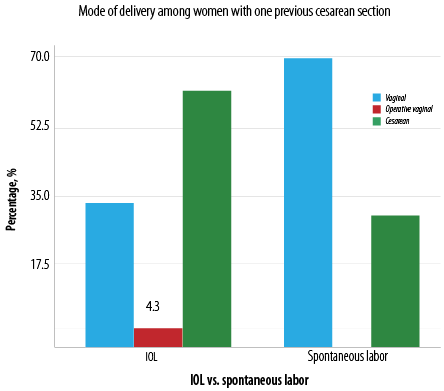 Figure 1: Comparison of mode of delivery among women who had a previous cesarean delivery who underwent induction of labor (IOL) to those who underwent spontaneous labor.
Table 3 compares the duration of labor stages between the study groups. There were no statistically significant differences in the mean duration of active labor, mean duration of second stage of labor, or mean duration of third stage of labor.
Table 3: Comparison of duration of labor stages.
|
Duration of active labor (hr:min)
|
5:31 ± 3:18
|
6:11 ± 2:45
|
0.060
|
|
Duration of second stage (min:sec)
|
20:58 ± 28:56
|
17:30 ± 19:06
|
0.410
|
IOL: induction of labor.
The relatively longer interval between admission and delivery in hours, in the IOL group was statistically significant (33:58 ± 27:20 vs. 8:49 ± 13:09, p = 0.001). The total duration of hospital stay in hours was also significantly higher in the IOL group (90:44 ± 57:00 vs. 63:12 ± 98:29, p = 0.008) [Table 4].
Table 4: Admission to delivery interval and total duration of hospital stay (N = 260).
|
Admission to delivery interval (hr:min)
|
33:58 ± 27:20
|
8:49 ± 13:09
|
0.001*
|
IOL: induction of labor; *Significant.
Discussion
Nearly one-fifth of the participants delivered by IOL as against ~15% in a previous Omani study based on 2004–2006 data.3 The American College of Obstetricians and Gynecologists ARRIVE trial and subsequent supportive findings have made IOL more acceptable worldwide, including in Oman, which may explain the difference.
Our participants in the IOL group were more likely to have lower parity, be older, and deliver at a lower gestational age compared to those who had spontaneous delivery. Our findings align with a major US study by Harper et al.13 Higher mean gestational ages among women who had spontaneous labor have been consistently reported in studies, suggesting that women left to the natural process of childbirth are likely to delivery at a later gestational age.3,6,10,13
The leading indication for IOL was preexisting or GDM. The diagnosis of GDM/DM may affect the timing and mode of delivery, as pregnancy should not exceed 38 weeks if diabetes is medication-controlled and 40 weeks if diet-controlled. This explains the need to ensure delivery before its spontaneous onset among women with GDM/DM, which mostly occurred at a higher mean gestational age compared to IOL in our sample. Our observation on the indication for IOL contrasts with that of a Finnish study among GDM/DM women, where the commonest indication for IOL was postdated pregnancy, likely attributable to the lower diagnostic threshold in Oman for hyperglycemia in pregnancy.14,15
Irrespective of the mode of labor onset, the majority of our participants had vaginal delivery. However, operative delivery was significantly higher among the IOL group, which corroborates reports from observational studies by Harper et al,13 and Adler et al,16 which used methods similar to ours. On the contrary, the ARRIVE trial RCT reported a lower risk of operative delivery with elective at IOL at 39 weeks.3 Meanwhile, a trial by Walker et al,17 found no significant difference in risk. Both trials excluded all parturients who delivered before 39 weeks, while more than half of our study population delivered before 39 weeks. Additionally, the two trials focused more on delivery at gestational age versus continuing pregnancy, while women who eventually had IOL in the expectant management group were not analyzed as having had IOL. Also, these studies selected specific populations: the ARRIVE study was conducted among low-risk nulliparas, while the Walker et al,17 study focused on women older than 35.13 These differences affect comparability with our results.
Most operative interventions in our institution, including those related to fetal distress monitoring, strictly follow standard clinical criteria. This may have reduced fetal distress. Studies show that in some facilities, such assessment is often subjective in the absence of standardized clinical criteria, leading to increased fetal distress.18 Standardizing the CTG interpretations and ensuring experienced obstetrician input may reduce cesarean deliveries. In our participants who had one previous CD, vaginal delivery was more likely if they had spontaneous labor. This aligns with the Royal College of Obstetricians and Gynecologists guidelines, which emphasizes that spontaneous labor offers better chances for a successful vaginal birth
after cesarean.19
The low prevalence of maternal complications might be attributable to the quality of obstetric care at our hospital. There was no significant difference in the EBL, occurrence of PPH, or blood transfusion. All the perineal lacerations recorded were second-degree with, no significant difference between groups. Among a cohort of Swiss women, Brun et al,20 found EBL and the rate of PPH were slightly higher in the IOL group compared to the spontaneous labor group, but without a statistical significance.20 Our study has similar findings, as IOL was associated with a slightly higher EBL; however, the difference was too small to be clinically significant.20
Previous studies have documented conflicting effects of IOL on neonatal outcomes mainly because of heterogeneous study populations and designs, and differences in selection and outcomes of interest.9 In our study, most neonates had healthy Apgar scores irrespective of mode of delivery. NICU admissions and neonatal morbidity were low and similar between the groups. Similarly, Brun et al,20 found that although the risk of severe neonatal outcomes was slightly higher in induced labor, the differences were minimal and the overall prognosis for neonates was generally good. Studies showing a reduced risk of adverse neonatal outcomes with IOL have compared elective IOL at term with expectant management, with a focus on the gestational age of delivery and not the mode of labor onset.3,7,17,22,23 In a large Swedish retrospective study covering 18 years, the neonatal outcomes were worse in the IOL group. With the constantly evolving evidence to support intrapartum care, the intrapartum care in previous decades may not be identical to ours, which is based on recent data.9 Also, many of the neonatal outcomes, including neonatal sepsis, hyperbilirubinemia, and neonatal seizures that were recorded did not occur in our study, possibly due to our smaller sample size.
The effect of IOL on the duration of labor stages has ranged from prolongation to no effect to reduction. In our study, the duration of active labor, the second and third stages of labor, was not significantly different between the study groups. Our methods of inducing labor using, prostaglandins or cervical balloon, closely mimics the natural process by working on cervical ripening as well as stimulating uterine contractions, suggesting that the process of induction does not drastically alter the physiological timing of labor stages compared to spontaneous onset, once active labor is achieved. Harper et al,13 observed that IOL parturients spent a longer overall duration in labor than those with spontaneous labor. This difference was attributable to a prolonged latent phase, with no difference in the rate of labor progression once the active phase was established. In contrast, authors of a large Palestinian study based on 8290 deliveries during 2015–2016 reported a shorter duration of the active phase of labor, due to potentiation of contractions induced by medications.23
Advance estimations of the mean admission to delivery interval and total duration of hospital stay are important for forward planning. For example, the admission to delivery interval in our IOL group was about four times that of the spontaneous delivery group, and the mean total duration of hospital stay was about 1.4 times longer, a statistically significant difference between the groups. Previous studies have also shown that the admission-to-delivery interval is significantly longer in IOL women due to the time required for pre-IOL evaluation, medical interventions like cervical ripening, reviewing preexisting medical conditions, and arranging for possible blood transfusions.3,13,22
The major strengths of this study include intergroup comparison data of hospital stay duration, which may assist with staff planning and counseling of expectant women and their relatives. Furthermore, the inclusion of women with previous CD enablesk the findings to inform counseling in this subgroup. Although our study has not been able to address the detailed safety profile of IOLs in our setting, it provides valuable baseline data and may stimulate future well-designed prospective studies.
This study had several limitations. These include its retrospective nature, which prevented assessment of some important variables such as pain assessment and maternal satisfaction, as these are not routinely documented. The purposive sampling method of the spontaneous labor introduced a risk of selection bias: GDM/DM and intrauterine growth restriction, the leading indications for IOL, were not matched in the spontaneous delivery group, and this could be a confounding factor in the higher rate of operative delivery. In addition, some observations, including EBL, duration of active labor, and duration of the second stage of labor, were assessed subjectively; they are therefore prone to observation errors.
Conclusion
IOL is associated with increased risk of operative delivery compared with spontaneous labor, largely due to intrapartum fetal distress. This increased risk was also observed among women in this study with a previous cesarean section. Despite this, maternal and neonatal complications remained low and comparable between the groups. IOL was additionally associated with longer admission-to-delivery intervals and prolonged hospital stay, highlighting the need for careful patient selection, close intrapartum monitoring, and
appropriate counseling.
Disclosure
The authors declare no conflicts of interest. No funding was received for this study.
references
- 1. Ryan R, McCarthy F. Induction of labour. Obstet Gynaecol Reprod Med 2016;26(10):304-310.
- 2. WHO recommendations: induction of labour at or beyond term. Geneva: World Health Organization; 2022.
- 3. Paliwal V, Dikhit S, Singh S. Safety of induction of labor with vaginal prostaglandins (e2) in grandmultipara. Oman Med J 2009 Jul;24(3):184-187.
- 4. Grobman WA, Rice MM, Reddy UM, Tita AT, Silver RM, Mallett G, et al; Eunice Kennedy Shriver National Institute of Child Health and Human Development Maternal–Fetal Medicine Units Network. Labor induction versus expectant management in low-risk nulliparous women. N Engl J Med 2018 Aug;379(6):513-523.
- 5. ACOG clinical guidance for integration of the findings of the ARRIVE trial: labor induction versus expectant management in low-risk nulliparous women. 2018 [cited 2025 May 4]. Available from: https://opqic.org/acog-practice-advisory-smfm-clinical-statement-clinical-guidance-for-integration-of-the-findings-of-the-arrive-trial-labor-induction-versus-expectant-management-in-low-risk-nulliparous-women/.
- 6. Nethery E, Levy B, McLean K, Sitcov K, Souter VL. Effects of the ARRIVE (a randomized trial of induction versus expectant management) trial on elective induction and obstetric outcomes in term nulliparous patients. Obstet Gynecol 2023 Aug;142(2):242-250.
- 7. Middleton P, Shepherd E, Crowther CA. Induction of labour for improving birth outcomes for women at or beyond term. Cochrane Database Syst Rev 2018 May;5(5):CD004945.
- 8. Devarasetty S, Habeebullah S. Induction of labor: a review. J Basic Clin Appl Health Sci 2019;2(4):128-133.
- 9. Bengtsson F, Ekéus C, Hagelroth A, Ahlsson F. Neonatal outcomes of elective labor induction in low-risk term pregnancies. Sci Rep 2023 Sep;13(1):15830.
- 10. Gonsalves H, Al-Riyami N, Al-Dughaishi T, Gowri V, Al-Azri M, Salahuddin A. Use of intracervical Foley catheter for induction of labour in cases of previous caesarean section: experience of a single tertiary centre in Oman. Sultan Qaboos Univ Med J 2016 Nov;16(4):e445-e450.
- 11. Masters K, Loda T, Al-Abri R, Johannink J, Herrmann-Werner A. Surgical patients’ use of, and attitudes towards, the internet for e-patient activities in Germany and Oman. Ann Med Surg (Lond) 2020 Jun;55:287-293.
- 12. Hofmeyr GJ, Bernitz S, Bonet M, Bucagu M, Dao B, Downe S, et al. WHO next-generation partograph: revolutionary steps towards individualised labour care. BJOG 2021 Sep;128(10):1658-1662.
- 13. Harper LM, Caughey AB, Odibo AO, Roehl KA, Zhao Q, Cahill AG. Normal progress of induced labor. Obstet Gynecol 2012 Jun;119(6):1113-1118.
- 14. Al Subhi SK, Al Kindi RM, Al Rawahi A, Al Seyabi IS, Al Mukhaini A. Prevalence of gestational diabetes mellitus using the latest World Health Organization diagnostic criteria among Omani women in Muscat, Oman. Oman Med J 2021 Jan;36(1):e215.
- 15. Ellenberg A, Sarvilinna N, Gissler M, Ulander VM. New guidelines for screening, diagnosing, and treating gestational diabetes - evaluation of maternal and neonatal outcomes in Finland from 2006 to 2012. Acta Obstet Gynecol Scand 2017 Mar;96(3):372-381.
- 16. Adler K, Rahkonen L, Kruit H. Maternal childbirth experience in induced and spontaneous labour measured in a visual analog scale and the factors influencing it; a two-year cohort study. BMC Pregnancy Childbirth 2020 Jul;20(1):415.
- 17. Walker KF, Bugg GJ, Macpherson M, McCormick C, Grace N, Wildsmith C, et al; 35/39 Trial Group. Randomized trial of labor induction in women 35 years of age or older. N Engl J Med 2016 Mar;374(9):813-822.
- 18. Jabeen J, Mansoor MH, Mansoor A. Analysis of indications of caesarean sections. J Rawalpindi Med Col 2013;17(1).
- 19. Royal College of Obstetricians and Gynaecologists. Birth after previous caesarean birth. Green-top Guideline No. 45. London: RCOG; 2015. [Cited 2024 Dec 4]. Available from: https://www.rcog.org.uk/guidance/browse-all-guidance/green-top-guidelines/birth-after-previous-caesarean-birth-green-top-guideline-no-45/.
- 20. Brun R, Spoerri E, Schäffer L, Zimmermann R, Haslinger C. Induction of labor and postpartum blood loss. BMC Pregnancy Childbirth 2019;19(1):265.
- 21. Wennerholm U-B, Saltvedt S, Wessberg A, Alkmark M, Bergh C, Wendel SB, et al. Induction of labour at 41 weeks versus expectant management and induction of labour at 42 weeks (SWEdish Post-term Induction Study, SWEPIS): multicentre, open label, randomised, superiority trial. BMJ 2019 Nov;367:l6131.
- 22. Souter V, Painter I, Sitcov K, Caughey AB. Maternal and newborn outcomes with elective induction of labor at term. Am J Obstet Gynecol 2019 Mar;220(3):273.e1-273.e11.
- 23. Hassan S, Laine K, Fosse E, Abu-Rmeileh NM, Ali-Masri HY, Zimmo M, et al. Induction of labor among singleton pregnancies in six Palestinian governmental hospitals: a population-based cohort study. Int J Womens Health 2019 Nov;11:597-605.