The most prevalent entrapment neuropathy in the lower extremity is common peroneal nerve neuropathy.1 The peroneal nerve passes superficially through the fibula head, and this area is extremely vulnerable to damage and compression.2 Trauma, surgery, or postural compression of the peroneal nerve near the head of the fibula are major causes of acute peroneal nerve damage. There are very few non-traumatic causes, such as tumors, intraneural ganglions, hemorrhages, or cysts.1,3 Systemic diseases like diabetes mellitus (DM), crossing of the legs, sitting and lying down, sitting with one foot tucked under the other leg, and wearing tight clothes increase the risk of nerve palsy.4–6 Another factor contributing to common peroneal nerve (CPN) compression neuropathy is prolonged squatting.7,8 However, bilateral peroneal nerve paralysis following prolonged squatting is uncommon.5,7,9,10 Squatting-induced CPN neuropathy in the workplace has been reported in agricultural workers,11,12 sewer pipe workers,10 and harvesting farm workers,13–15 but little is known about this type of neuropathy in other professions. In this report, we present a floor tile worker with a history of prolonged squatting who developed bilateral numbness and weakness in the lower legs due to a bilateral peroneal nerve injury.
Case report
A 27-year-old male patient presented to our outpatient clinic with tingling and numbness in the lower legs and tops of both feet. He also complained of weakness in the legs. The history indicated that he was a floor tile worker and had performed squatting for 6–7 hours, two months before the presentation. He did not have history of DM or exposure to toxins. His height and weight were 180 cm and 76 kg, respectively. The systemic examination was normal. On neurological examination, the patient had numbness down the leg to below the knee on both sides with no urinary or fecal incontinence. Muscle examination showed decreased dorsiflexion of the ankle and extensor hallucis longus muscle strength of 3/5 and 3/5 on the right and left sides, respectively. We referred him to an orthopedic specialist for consultation. Blood laboratory tests and radiological scans of the knee and thoracolumbar region were both normal [Figures 1, 2, and 3]. An electromyography revealed an impression of a subacute-stage peroneal nerve lesion located 4 cm proximal to the fibular head on the right and left sides. Based on these clinical and electromyography findings, the patient was diagnosed as having bilateral peroneal nerve paralysis. He was initiated on steroid and physical therapy, and removed from work. A spring-ankle foot orthosis was prescribed to support dorsiflexion of the feet. Physical therapy included stretching, balancing, mobilization, and strengthening exercises. At the end of the eight-week therapy, the patient had extensor hallucis longus muscle strength of 5/5 bilaterally. A written consent was obtained from the patient.
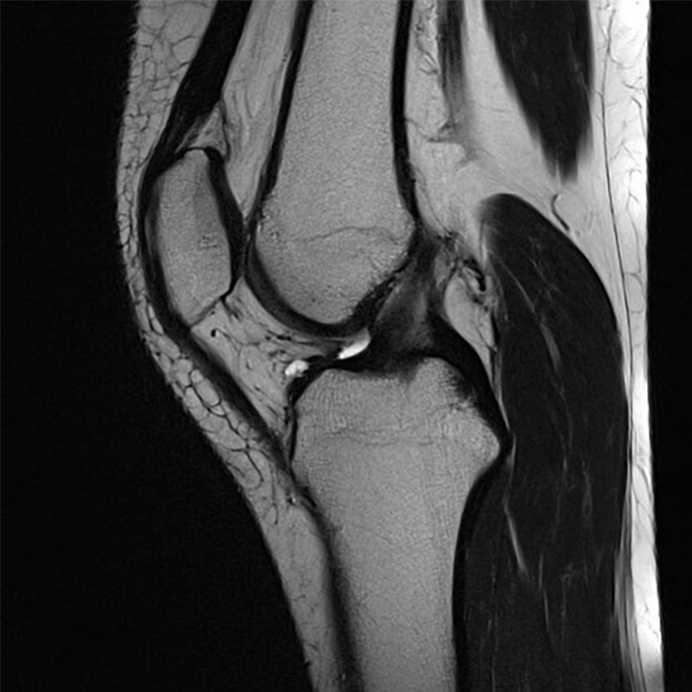 Figure 1: Normal appearing right knee on MRI.
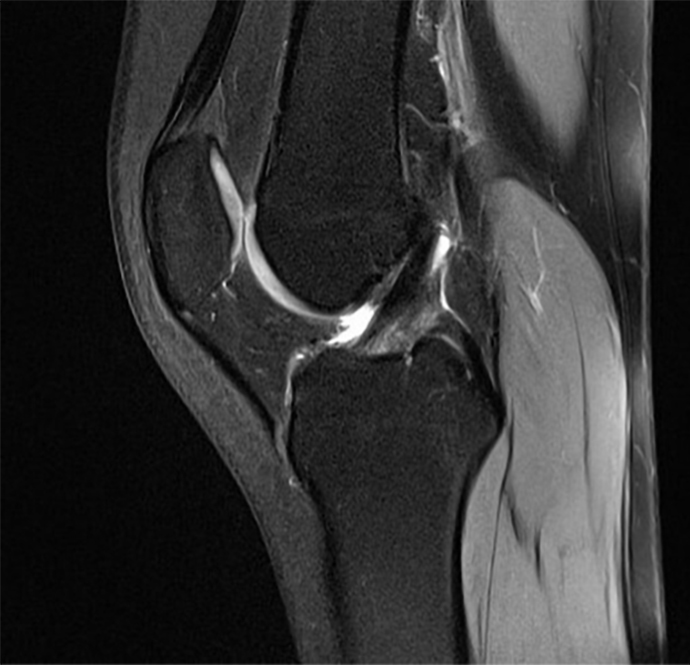 Figure 2: Normal appearing left knee on MRI.
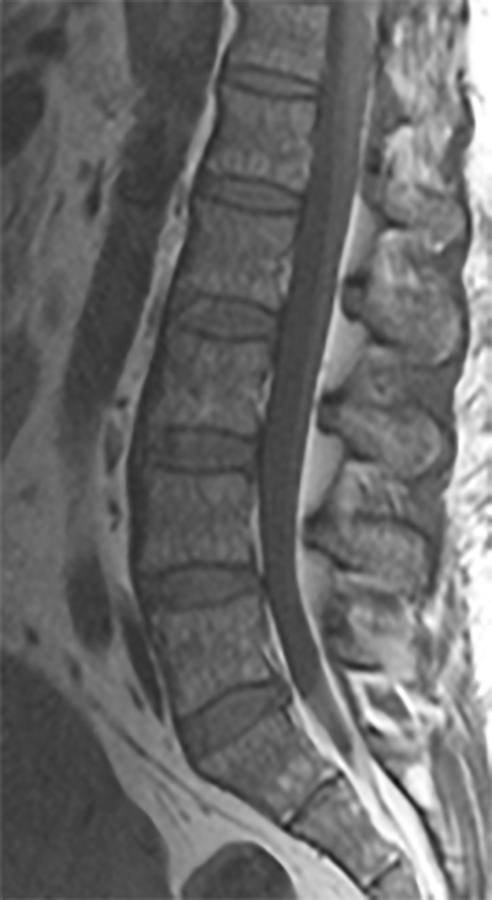 Figure 3: Lumbosacral region, which appears normal on MRI.
Discussion
Peroneal neuropathy, also known as fibular neuropathy, is the most prevalent compressive neuropathy of the lower extremity and the third most prevalent focal neuropathy overall. Although peroneal nerve entrapment can occur in the calf, ankle, or foot, it most frequently occurs at or around the fibular head.16 Symptoms of CPN neuropathy include ankle dorsiflexion weakness, great toe extension weakness, foot eversion weakness, sensory loss on the dorsum of the foot, foot drop, and steppage gait.17 In our patient, the mean daily squat time was six hours, and the symptoms started gradually on the third day of activity. Similar to our study, Sipahioğlu et al,15 found in their study of 16 seasonal farm workers with CPN palsy that the mean daily squat time was 6.8 hours, and symptoms developed within 1–6 weeks after working. Also, in the study conducted by Kodaira et al,10 on a sewer pipe worker, the mean daily squat posture was 6 hours in a narrow sewer pipe. However, in the study by Tuna et al,11 on three agricultural workers, the mean daily squat time was less than our study at 4–5 hours. In the study by Rydevik et al.,18 the symptoms appeared after two hours of nerve compression but resolved within 2 hours. In wide workspaces, such as on a farm, workers can stretch their legs alternately to relieve nerve pressure,15 but in confined spaces, such as tile and sewer pipes, workers are unable to stretch their legs sufficiently, making them more prone to developing squatting-induced CPN palsy. Following additional neural pressures, intra-neurological microvascular blood flow, axonal transport, and nerve function are disrupted within minutes to hours.19 The first line of treatment in these patients is usually non-surgical and involves the use of the brace, lifestyle modification, removing activities causing external compression,20,21 and steroid therapy.11 It is crucial to eliminate the causative factor in the early stages of paralysis because long-term and repeated pressure from CPN can cause irreversible degeneration of the axon, which is called Waller’s degeneration, and in such cases, surgical treatment is recommended.1,7 Eliminating any risk of external compression, stabilizing any potential unstable joints that may be adding pressure on the nerve, and reducing inflammation are typically the first lines of treatment.21 In tiling, workers are constantly squatting, causing damage and pressure on the nerve. To complete the treatment process, the patient was removed from the work environment.
Conclusion
Peroneal nerve injury is a preventable occupational disease that occurs in jobs requiring frequent squatting and may cause permanent disability in workers. Avoiding prolonged squatting, especially in small spaces, and incorporating knee and knee muscle stretching exercises are highly effective in preventing it. Therefore, educating young workers with little work experience in such jobs can prevent the development and spread of this complication.
Disclosure
The authors declare no conflicts of interest.
references
- 1. Berry H, Richardson PM. Common peroneal nerve palsy: a clinical and electrophysiological review. J Neurol Neurosurg Psychiatry 1976 Dec;39(12):1162-1171.
- 2. Manoharan A, Suresh SS, Sankaranarayanan L. Proximal fibular osteochondroma producing common peroneal nerve palsy in a post-cesarean section patient. Oman Med J 2013 May;28(3):e047.
- 3. Garland H, Moorhouse D. Compressive lesions of the external popliteal (common peroneal) nerve. Br Med J 1952 Dec;2(4799):1373-1378.
- 4. Fabre T, Piton C, Andre D, Lasseur E, Durandeau A. Peroneal nerve entrapment. J Bone Joint Surg Am 1998 Jan;80(1):47-53.
- 5. Reif ME. Bilateral common peroneal nerve palsy secondary to prolonged squatting in natural childbirth. Birth 1988 Jun;15(2):100-102.
- 6. Brown RE, Storm BW. “Congenital” common peroneal nerve compression. Ann Plast Surg 1994 Sep;33(3):326-329.
- 7. Toğrol E. Bilateral peroneal nerve palsy induced by prolonged squatting. Mil Med 2000 Mar;165(3):240-242.
- 8. Yu JK, Yang JS, Kang SH, Cho YJ. Clinical characteristics of peroneal nerve palsy by posture. J Korean Neurosurg Soc 2013 May;53(5):269-273.
- 9. Güzel Ş, Ozen S, Coşar SN. Bilateral peroneal nerve palsy secondary to prolonged sitting in an adolescent patient. Int J Neurosci 2022 Sep;132(9):885-887.
- 10. Kodaira M, Sekijima Y, Ohashi N, Takahashi Y, Ueno K, Miyazaki D, et al. Squatting-induced bilateral peroneal nerve palsy in a sewer pipe worker. Occup Med (Lond) 2017 Jan;67(1):75-77.
- 11. Tuna M, Satis S. Bilateral peroneal nerve paralysis in agricultural workers: three case reports. Occup Med (Lond) 2021 Nov;71(8):381-384.
- 12. Yildirim A, Temel M. Bilateral peroneal nerve palsy due to prolonged squatting in farmers: clinical and electrophysiological outcome. Neurol Res 2023 Feb;45(2):118-123.
- 13. Laterza A, Nappo A. [Paralysis of the peroneal nerve in hazelnut gatherers]. Acta Neurol (Napoli) 1977;32(5):606-612.
- 14. Koller RL, Blank NK. Strawberry pickers’ palsy. Arch Neurol 1980 May;37(5):320.
- 15. Sipahioğlu S, Zehir S, Aşkar H, Işıkan UE. Peroneal nerve palsy secondary to prolonged squatting in seasonal farmworkers. Acta Orthop Traumatol Turc 2015;49(1):45-50.
- 16. Marciniak C; Electrodiagnostic Features and Clinical Correlates. Fibular (peroneal) neuropathy: electrodiagnostic features and clinical correlates. Phys Med Rehabil Clin N Am 2013 Feb;24(1):121-137.
- 17. Anderson JC. Common fibular nerve compression: anatomy, symptoms, clinical evaluation, and surgical decompression. Clin Podiatr Med Surg 2016 Apr;33(2):283-291.
- 18. Rydevik B, Nordborg C. Changes in nerve function and nerve fibre structure induced by acute, graded compression. J Neurol Neurosurg Psychiatry 1980 Dec;43(12):1070-1082.
- 19. Rempel D, Dahlin L, Lundborg G. Pathophysiology of nerve compression syndromes: response of peripheral nerves to loading. J Bone Joint Surg Am 1999 Nov;81(11):1600-1610.
- 20. Garg B, Poage C. Peroneal nerve palsy: evaluation and management. J Am Acad Orthop Surg 2016 May;24(5):e49.
- 21. Pomeroy G, Wilton J, Anthony S. Entrapment neuropathy about the foot and ankle: an update. J Am Acad Orthop Surg 2015 Jan;23(1):58-66.