Cancer is a major global challenge, responsible for nearly one in six deaths and a high proportion of premature deaths from noncommunicable diseases, particularly among people aged 30–69.1 Global incidence of cancer is increasing, driven by population growth, aging, and unhealthy lifestyle choices. In 2020, there were 19.3 million new cancer cases and almost 10 million deaths, making it the second most common cause of death globally.2 The trends in cancer incidence and mortality vary across regions, shaped by socioeconomic conditions and access to effective prevention, diagnosis, and treatment.
Rising rates of metabolic dysfunction and obesity have implications for the incidence of diseases related to metabolic disorders.3 There is a well-established link between overweight and obesity, as well as metabolic dysfunction independent of body mass index and several types of cancer.4–6 Metabolic dysfunction-associated fatty liver disease, a prominent manifestation of metabolic dysfunction, is strongly associated with liver cancer and also increases the risk for extrahepatic malignancies such as colon and breast cancers.5,7,8
Arabs and Arabic-speaking populations are widely distributed across the Middle East and North Africa region. For the purposes of this study, the Arab region refers to the 22 Arab League member states across the Middle East and North Africa region, whose combined population is projected to exceed 500 million by 2026. Despite historic and ethnolinguistic commonalities, the Arab region is not epidemiologically homogeneous. The 22 countries span three broadly distinct subregional contexts: the six Gulf Cooperation Council (GCC) states, six non-GCC Asian countries, and ten North African countries [Figure 1].
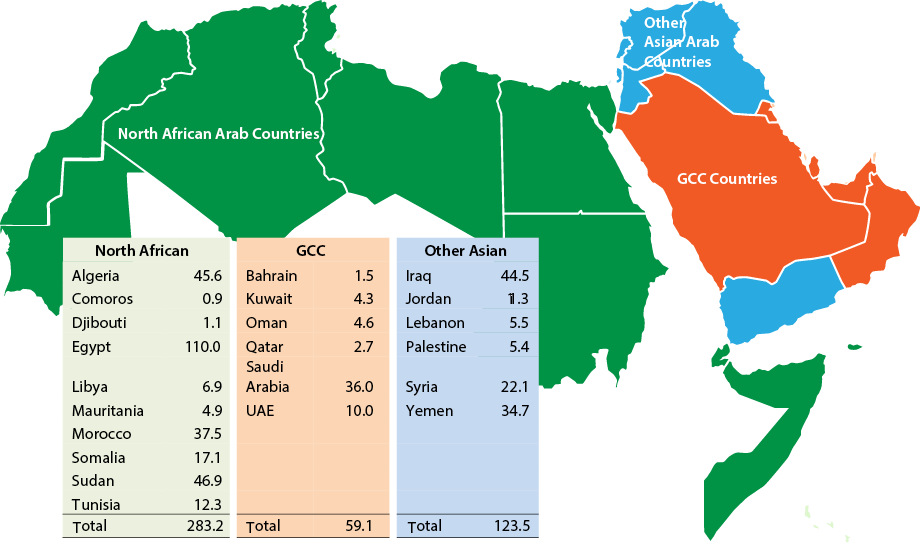 GCC: Gulf Cooperation Council.
Population values are for 2022 (shown in millions). Figures for GCC countries include both citizens and expatriate residents.
Figure 1: The 22 Arab League countries by subregion.
These three groups of countries differ substantially in demographic structure, socioeconomic conditions, pace of urbanization, conflict exposure, obesity prevalence, healthcare affordability, cancer registry maturity, and population growth. Several non-GCC Asian Arab countries have epidemiologic profiles shaped by conflict exposure, variable health system capacity, and uneven surveillance infrastructure.9 North African Arab countries account for the largest share of the region’s population. This subregion has a variable history of conflict exposure, economic challenges, population growth rates, risk-factor distributions, and availability of cancer data.10
The six GCC countries differ substantially from all other Arab countries in two parameters. First, they have undergone rapid economic development, have low conflict exposure, high urbanization and affluence, and relatively advanced and publicly funded/free healthcare systems. Second, GCC countries have substantial non-national resident populations. These differences need to be kept in mind when comparing GCC countries with other Arab countries.
Despite these regional differences, the Arab region as a whole is experiencing alarming rises in obesity and declines in metabolic health, with 10 of the 15 countries with the highest global obesity rates located here.9 Over 50% of women in Kuwait, Qatar, and Libya are classified as overweight or obese. The region also has the highest disability-adjusted life years related to metabolic risk factors.11 While metabolic dysfunction-related cancer burden is growing, there is a lack of comprehensive understanding of its epidemiology, hindering the development of targeted prevention strategies and cancer control policies, especially in the North African Arab countries.
This study aims to describe and estimate the current disease burden of ten metabolic dysfunction-related cancers—colon, liver, gallbladder, pancreas, breast, corpus uteri, ovarian, kidney, thyroid, and multiple myeloma—both collectively and individually, taking into account subregional variability. Furthermore, it includes predictions of future incidence and mortality burden in Arab countries by 2050, based on the latest GLOBOCAN estimates provided by the International Agency for Research on Cancer. Figure 1 shows the subregional classification of the 22 Arab League countries and distribution of the total population of ~453 million as of 2022, projected to exceed 500 million by 2026. Estimated 2022 populations were 60.4 million in GCC countries (n = 6), including ~ 31 million non-citizen residents, 115.0 million in other Asian Arab countries (n = 6), and 278.0 million in North African Arab countries (n = 10) [Figure 1].
Methods
Data on the burden of ten metabolic dysfunction-related cancers—colon, liver, gallbladder, pancreas, breast, corpus uteri, ovarian, kidney, thyroid, and multiple myeloma—from the 22 Arab League states were obtained from the publicly available GLOBOCAN 2022 database (https://gco.iarc.who.int), developed by International Agency for Research on Cancer. GLOBOCAN provides detailed worldwide cancer statistics covering 185 countries and regions. Details of the data sources and estimation methods have been described elsewhere.12 In summary, GLOBOCAN compiles national cancer estimates from the best available data and generates estimates modeled on neighboring data when local data are incomplete. User-friendly visualizations of GLOBOCAN data are available through the open-access platforms ‘Cancer Today’ (https://gco.iarc.fr/today) and ‘Cancer Tomorrow’ (https://gco.iarc.fr/tomorrow/).
This study used aggregated estimates from the GLOBOCAN 2022 database; therefore, no additional study-specific inclusion or exclusion criteria were applied. Because the data are de-identified and publicly available, ethical approval and informed consent were also not required. We analyzed incidence and mortality estimates for the ten cancers associated with metabolic dysfunction for 2022 globally and across the 22 Arab League countries, including subregional comparisons. Projected changes in incidence and mortality for 2050 were also evaluated at a global, subregional, and country levels.
Results
In 2022, the 22 Arab countries reported more than half a million new cancer cases, accounting for 2.5% of the nearly 20 million global cases. Among the Arab cases, 218,746 (43.5%) were related to metabolic dysfunction. Overall, the age-standardized incidence rate (ASIR) for all cancers was lower in Arab countries than globally (131.5 vs. 253.3), with large subregional variations.
Female breast cancer was the most frequently diagnosed metabolic dysfunction-related cancer, with 95,609 cases, making up 43.7% of the overall burden. This was followed by liver and intrahepatic bile duct cancers (36 783 cases; 16.8%), colon cancer (22,752 cases; 10.4%), thyroid cancer (17 435 cases; 8.0%), and pancreatic cancer (10 356 cases 4.7%) [Table 1]. The ASIRs for breast cancer (48.7 vs 46.8) and liver cancer (10.3 vs 8.6) were higher than the global averages.
Table 1: Summary of metabolic dysfunction-related cancer cases and incidence rates in 2022 globally in the 22 Arab League countries.
|
ALL ARAB COUNTRIES
|
|
|
|
|
|
|
|
Breast
|
–
|
–
|
95 609
|
48.7
|
95 609
|
48.7
|
|
Colon
|
12 173
|
6.7
|
10 579
|
5.8
|
22 752
|
6.2
|
|
Corpus uteri
|
–
|
–
|
7880
|
4.4
|
7880
|
4.4
|
|
Gallbladder
|
1370
|
0.8
|
2601
|
1.5
|
3971
|
1.1
|
|
Kidney
|
5043
|
2.7
|
3456
|
1.8
|
8499
|
2.2
|
|
Liver (C22)
|
23 145
|
13.0
|
13 638
|
7.6
|
36 783
|
10.3
|
|
Multiple myeloma
|
2866
|
1.6
|
1948
|
1.1
|
4814
|
1.4
|
|
Ovary
|
–
|
–
|
10 647
|
5.6
|
10 647
|
5.6
|
|
Pancreas
|
6310
|
3.6
|
4046
|
2.3
|
10 356
|
2.9
|
|
Thyroid
|
4165
|
2.0
|
13 270
|
6.5
|
17,435
|
4.2
|
|
Total
|
55 072
|
–
|
163 674
|
–
|
218 746
|
–
|
|
WORLD
|
|
|
|
|
|
|
|
Breast
|
–
|
–
|
2 296 840
|
46.8
|
2 296 840
|
46.8
|
|
Colon
|
609 228
|
12.4
|
533 058
|
9.2
|
1 142 286
|
10.7
|
|
Corpus uteri
|
–
|
–
|
420 368
|
8.4
|
420 368
|
8.4
|
|
Gallbladder
|
43 538
|
0.9
|
78 953
|
1.4
|
122 491
|
1.2
|
|
Kidney
|
277 800
|
5.9
|
157 040
|
3.0
|
434 840
|
4.4
|
|
Liver (C22)
|
600 676
|
12.7
|
265 460
|
4.8
|
866 136
|
8.6
|
|
Multiple myeloma
|
103 805
|
2.1
|
84 147
|
1.5
|
187 952
|
1.8
|
|
Ovary
|
–
|
–
|
324 603
|
6.7
|
324 603
|
6.7
|
|
Pancreas
|
269 709
|
5.5
|
241 283
|
4.0
|
510 992
|
4.7
|
|
Thyroid
|
206 485
|
4.6
|
614 729
|
13.6
|
821 214
|
9.1
|
Male breast cancer data not included. Projections for Gulf Cooperation Council countries include both citizens and expatriate resident populations.
At the sub-regional level, the ASIR patterns differ markedly. North African countries have a higher liver cancer burden. The GCC states generally show higher ASIRs for several obesity-linked cancers (e.g., breast cancer). The remaining Asian Arab countries exhibit a more mixed profile with lower ASIRs, but substantial heterogeneity driven by conflict-affected states and surveillance gaps [Table 2].
Table 2: The Arab countries with highest ASIR and ASMR values for selected metabolic dysfunction-related cancers, as of 2022 (per 100 000 population).
|
Breast
|
Algeria (61.9)
|
46.8
|
Somalia (25.7)
|
12.7
|
|
Colon
|
Palestine (12.2)
|
10.7
|
Libya (7.9)
|
4.7
|
|
Corpus uteri
|
UAE (10.3)
|
8.4
|
UAE (2.8)
|
1.7
|
|
Gallbladder
|
Algeria (2.7)
|
1.2
|
Libya (1.8)
|
0.8
|
|
Kidney
|
Lebanon (3.7)
|
4.4
|
Oman (1.8)
|
1.5
|
|
Liver (C22)
|
Egypt (32.0)
|
8.6
|
Egypt (30.8)
|
7.4
|
|
Multiple myeloma
|
Palestine (3.4)
|
1.8
|
Palestine (2.9)
|
1.1
|
|
Ovary
|
Somalia (7.0)
|
6.7
|
Somalia (5.7)
|
4.0
|
|
Pancreas
|
Palestine (4.6)
|
4.7
|
Palestine (4.5)
|
4.2
|
ASIR: Age-standardized incidence rate; ASMR: Age-standardized mortality rate.
Male breast cancer data not included.. Projections for Gulf Cooperation Council countries include both citizens and expatriate resident populations.
At the country level, Algeria reported the highest ASIR for breast cancer at 61.9, while Saudi Arabia and Yemen recorded the lowest at 25.3 and 25.4, respectively. The incidence of liver cancer was disproportionately high in Egypt (ASIR: 32.0) and Mauritania (ASIR: 9.3), whereas Algeria had the lowest (ASIR: 1.7).
Sex-specific trends mirrored the overall patterns: liver cancer was the most common metabolic dysfunction-related cancer among males (ASIR: 13.0), followed by colon cancer (ASIR: 6.7). Breast cancer dominated among females (ASIR: 48.7), followed by liver cancer (ASIR: 7.6). There was a significant sex disparity in thyroid cancer incidence, with the female ASIR (6.5) more than three times the male ASIR (2.0) [Table 2].
Figure 2 presents the age-standardized incidence and mortality rates of metabolic dysfunction-related cancers in Arab League countries in 2022. The deaths attributed to these cancers represented 39.2% of total cancer deaths in the region, higher than the global average of 32.3% [Figure 2].
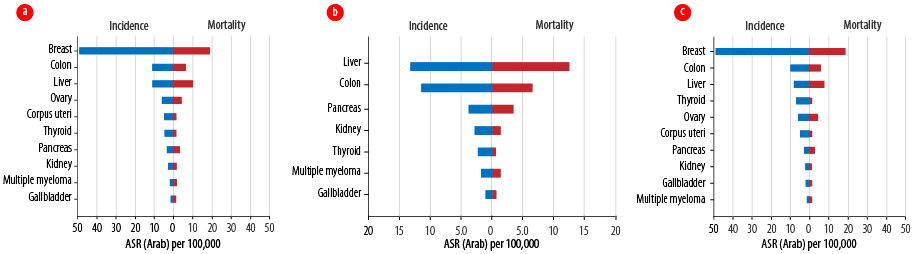 Male breast cancer data not included. Projections for Gulf Cooperation Council countries include both citizens and expatriate resident populations.
Figure 2: Age-standardized rates (ASRs) for the incidence and mortality of colon, liver, gallbladder, pancreatic, breast, corpus uteri, ovarian, kidney, thyroid, and multiple myeloma cancers in the 22 Arab League countries in (a) both sexes, (b) male, (c) female.
The overall age-standardized mortality rate (ASMR) for cancer in Arab countries was 66.4, lower than the global level of 123.6. The ASMR for metabolic dysfunction-related cancers was 27.6, again lower than the global rate of 44.6.
At the subregional level, GCC countries show relatively elevated mortality for several metabolic-linked cancers. North Africa has a high liver cancer mortality burden. Other Asian Arab countries generally display lower and more variable ASMRs compared with the overall Arab region ASMR.
At country level, the ASMR for liver cancer was disproportionately high in Egypt (ASMR: 30.8), followed by Mauritania (ASMR: 9.1), and the lowest in Algeria (ASMR: 1.5). For colon cancer, higher ASMRs were noted in Libya (ASMR: 7.9), followed by Palestine (ASMR: 7.4), with the lowest in Comoros (ASMR: 1.4).
Liver cancer was the leading cause of death related to metabolic dysfunction in Arab males, with an ASMR of 12.7. Egypt had the highest rate at 41.5, followed by Mauritania at 11.0, while Algeria reported the lowest rate at 1.5. Breast cancer was the leading cause of cancer death in females, with 35 261 deaths (30.2%), also above the global average (18.4 vs 12.7). Colon cancer ranked third, causing 13 245 deaths (11.3%) with an ASMR of 3.7, compared to 4.7 globally. Somalia reported the highest rate at 25.7, followed by Iraq at 23.5, with Saudi Arabia having the lowest rate at 7.6 [Figure 2].
The Arab region is expected to experience a significant increase in metabolic dysfunction-related cancers across various types by 2050, with specific trends observed in certain countries [Table 3].
Table 3: Summary of projected cases and percentage change in metabolic dysfunction-related cancer cases from 2022 to 2050 globally in 22 the Arab League countries.
|
Arab
|
|
|
|
|
|
|
|
|
|
|
Breast
|
–
|
–
|
–
|
95.6
|
189.9
|
98.6
|
95.6
|
189.9
|
98.6
|
|
Colon
|
12.2
|
26.5
|
117.4
|
10.6
|
25.6
|
142.4
|
22.8
|
52.1
|
129.1
|
|
Corpus uteri
|
|
|
|
7.9
|
19.8
|
151.8
|
7.9
|
19.8
|
151.8
|
|
Gallbladder
|
1.4
|
3.7
|
167.3
|
2.6
|
6.6
|
153.3
|
4.0
|
10.3
|
158.2
|
|
Kidney
|
5.0
|
11.4
|
126.0
|
3.5
|
7.6
|
120.7
|
8.5
|
19.0
|
123.8
|
|
Liver (C22)
|
23.1
|
56.3
|
143.2
|
13.6
|
33.0
|
142.0
|
36.8
|
89.3
|
142.7
|
|
Multiple myeloma
|
2.9
|
7.4
|
159.6
|
1.9
|
5.0
|
157.2
|
4.8
|
12.4
|
158.6
|
|
Ovary
|
|
|
|
10.6
|
22.7
|
112.8
|
10.6
|
22.7
|
112.8
|
|
Pancreas
|
6.3
|
16.3
|
158.3
|
4.0
|
10.5
|
159.9
|
10.4
|
26.8
|
158.9
|
|
Thyroid
|
4.2
|
8.5
|
103.4
|
13.3
|
24.3
|
83.3
|
15.1
|
32.8
|
116.7
|
|
Total
|
55.1
|
130.1
|
136.1
|
163.6
|
345.0
|
110.9
|
216.5
|
475.1
|
119.4
|
|
Global
|
|
|
|
|
|
|
|
|
|
|
Breast
|
–
|
–
|
–
|
2296.8
|
3553.0
|
54.7
|
2296.8
|
3553.0
|
54.7
|
|
Colon
|
609.2
|
1154.6
|
89.5
|
533.1
|
1015.4
|
90.5
|
1142.3
|
2170.0
|
90.0
|
|
Corpus uteri
|
–
|
–
|
–
|
420.4
|
676.3
|
60.9
|
420.4
|
676.3
|
60.9
|
|
Gallbladder
|
43.5
|
83.9
|
92.7
|
79.0
|
144.8
|
83.4
|
122.5
|
228.7
|
86.7
|
|
Kidney
|
277.8
|
476.6
|
71.6
|
157.0
|
269.2
|
71.4
|
434.8
|
745.8
|
71.5
|
|
Liver (C22)
|
600.7
|
1036.8
|
72.6
|
265.5
|
487.8
|
83.7
|
866.1
|
1524.5
|
76.0
|
|
Multiple myeloma
|
103.8
|
194.4
|
87.2
|
84.1
|
154.3
|
83.3
|
188.0
|
348.6
|
85.5
|
|
Ovary
|
–
|
–
|
–
|
324.6
|
503.8
|
55.2
|
324.6
|
503.8
|
55.2
|
|
Pancreas
|
269.7
|
516.6
|
91.5
|
241.3
|
482.1
|
99.8
|
511.0
|
998.7
|
95.4
|
|
Thyroid
|
206.5
|
284.8
|
37.9
|
614.7
|
819.0
|
33.2
|
821.2
|
1103.8
|
34.4
|
Male breast cancer data not included. Projections for Gulf Cooperation Council countries include both citizens and expatriate resident populations.
Between 2022 and 2050, the total population of the 22 Arab countries is projected to increase from 453.4 million in 2022 to 694.3 million in 2050, while the corresponding global population is projected to increase from 7885.0 million to 9709.0 million.
All 10 metabolic dysfunction-related cancers are anticipated to see a larger increase in incidence in Arab countries compared to global averages by 2050 (119.4% vs. 66.3%). For instance, pancreatic cancer is expected to rise 95.4% globally, against 158.9% in Arab countries. Even breast cancer, projected to have the lowest rate of increase in Arab countries, is expected to surpass the global rise (98.6% vs. 54.7%).
GCC countries, particularly Kuwait, the United UAE, and Qatar, are projected to see some of the highest growth rates in metabolic dysfunction-related cancers. Kuwait shows the highest projected increase at 266.2%, followed by the UAE at 230.5%. Lebanon, an Asian Arab country, is projected to have the lowest projected incidence increase at 11.8% [Figure 3].
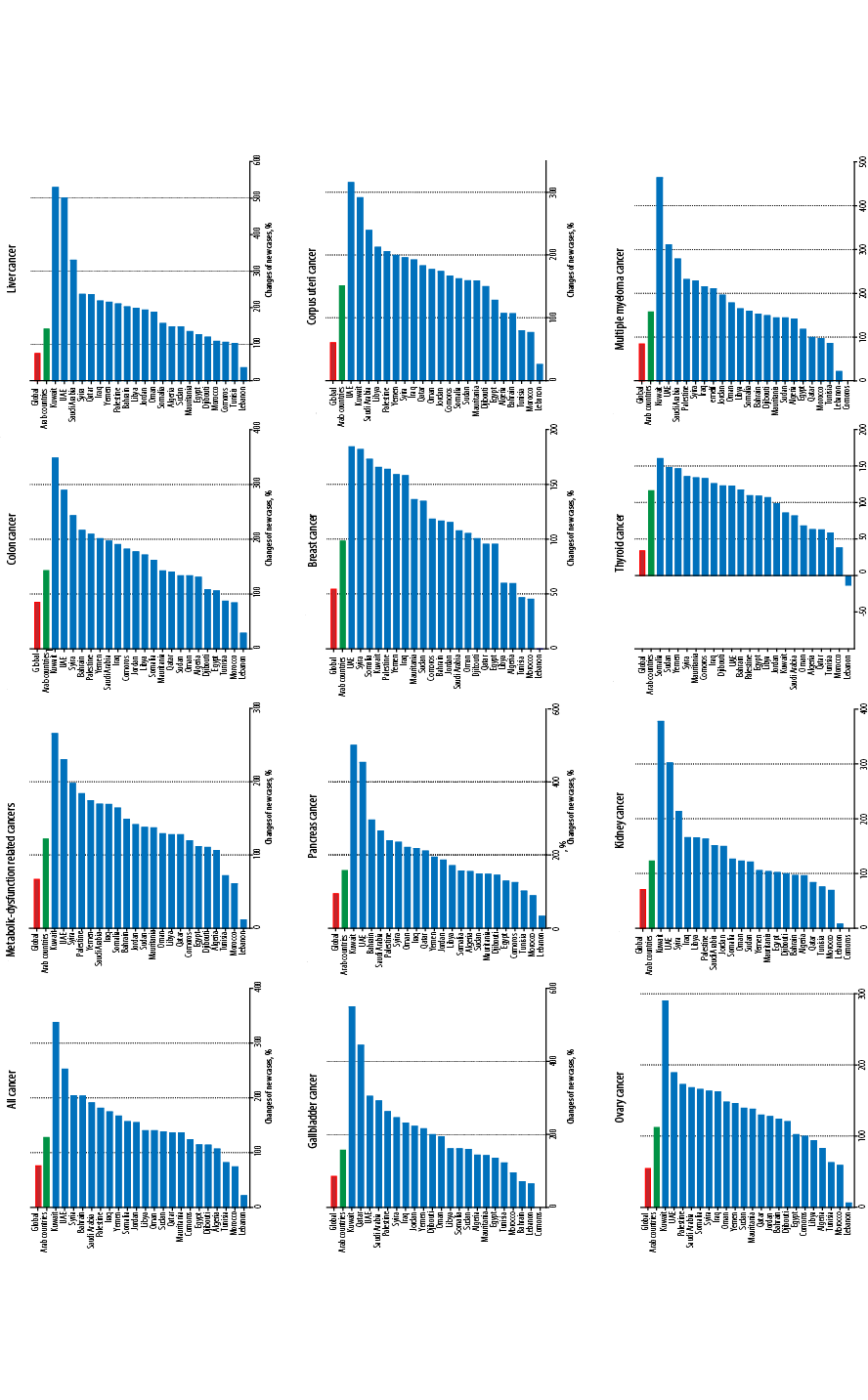 Male breast cancer data not included. Projections for Gulf Cooperation Council countries include both citizens and expatriate resident populations.
Figure 3: Projected percentage change in the number of new cases by 2050 for all cancers, all metabolic dysfunction-related cancers combined, and individual metabolic dysfunction-related cancers—colon, liver, gallbladder, pancreatic, breast, corpus uteri, ovarian, kidney, thyroid, and multiple myeloma cancers—across the globe and in the 22 Arab League countries.
While colon cancer is expected to rise by 90.0% globally, several Arab countries are projected to see even higher increases, led by the GCC countries and Syria. The GCC countries are also expected to top liver cancer growth. Among North African Arab countries, Egypt’s projected increase of 126.5% in liver cancer incidence, though not the highest in the Arab world, may still substantially increase the number of cases, from 27 946 in 2022 to more than 63 000 by 2050, because of Egypt’s large population size and growth rate.
Global projection for thyroid cancer indicates a 34.4% increase; however, the North African countries Somalia (+160.7%) and Yemen (+146.6%) are expected to experience rates more than four times higher than this average. Conversely, Lebanon is projected to show a 13.8% decrease.
An analysis of projected cancer mortality rates reveals similar trends, with all 10 metabolic-related cancers expected to see increased mortality rates in the Arab region that exceed global averages by 2050, with a projected rise of 147.1% compared to 87.4% globally [Table 4].
Table 4: Summary of projected deaths in metabolic dysfunction-related cancer cases and percentage changes between 2022 and 2050 globally and in the 22 Arab countries.
|
Arab
|
|
|
|
|
|
|
|
|
|
|
Breast
|
–
|
–
|
–
|
35.3
|
80.0
|
127.0
|
35.3
|
80.0
|
127.0
|
|
Colon
|
7.1
|
19.2
|
171.8
|
6.2
|
16.3
|
163.8
|
13.2
|
35.5
|
168.0
|
|
Corpus uteri
|
–
|
–
|
–
|
1.9
|
5.8
|
199.5
|
1.9
|
5.8
|
199.5
|
|
Gallbladder
|
1.0
|
2.8
|
177.2
|
1.9
|
5.1
|
165.5
|
2.9
|
7.9
|
169.6
|
|
Kidney
|
2.5
|
6.5
|
159.4
|
1.8
|
4.4
|
152.5
|
4.3
|
11.0
|
156.6
|
|
Liver (C22)
|
22.3
|
54.4
|
143.6
|
13.1
|
31.9
|
143.7
|
35.4
|
86.2
|
143.6
|
|
Multiple myeloma
|
2.4
|
6.8
|
183.1
|
1.7
|
4.5
|
173.0
|
4.1
|
11.4
|
179.0
|
|
Ovary
|
–
|
–
|
–
|
7.1
|
16.7
|
136.0
|
7.1
|
16.7
|
136.0
|
|
Pancreas
|
6.0
|
15.8
|
162.9
|
3.9
|
10.1
|
163.0
|
9.9
|
26.0
|
162.9
|
|
Thyroid
|
0.8
|
2.5
|
232.6
|
1.9
|
5.5
|
190.8
|
2.7
|
8.1
|
202.9
|
|
Total
|
42.1
|
108.0
|
156.5
|
74.8
|
180.3
|
141.0
|
116.8
|
288.6
|
147.1
|
|
Global
|
|
|
|
|
|
|
|
|
|
|
Breast
|
–
|
–
|
–
|
666.1
|
1138.2
|
70.9
|
666.1
|
1138.2
|
70.9
|
|
Colon
|
283.8
|
585.7
|
106.4
|
254.4
|
531.5
|
108.9
|
538.2
|
1117.2
|
107.6
|
|
Corpus uteri
|
–
|
–
|
–
|
97.7
|
183.1
|
87.4
|
97.7
|
183.1
|
87.4
|
|
Gallbladder
|
31.4
|
61.7
|
96.5
|
57.6
|
107.6
|
86.7
|
89.1
|
169.3
|
90.2
|
|
Kidney
|
100.3
|
195.1
|
94.5
|
55.6
|
109.7
|
97.3
|
156.0
|
304.9
|
95.5
|
|
Liver (C22)
|
521.8
|
923.6
|
77.0
|
236.9
|
447.9
|
89.1
|
758.7
|
1371.5
|
80.8
|
|
Multiple myeloma
|
67.0
|
133.2
|
98.9
|
54.4
|
106.4
|
95.5
|
121.4
|
239.6
|
97.4
|
|
Ovary
|
–
|
–
|
–
|
207.0
|
351.2
|
69.7
|
207.0
|
351.2
|
69.7
|
|
Pancreas
|
247.6
|
486.0
|
96.3
|
219.8
|
450.1
|
104.7
|
467.4
|
936.0
|
100.3
|
|
Thyroid
|
17.2
|
33.4
|
93.5
|
30.3
|
57.4
|
89.5
|
47.5
|
90.7
|
91.0
|
Male breast cancer data not included. Projections for Gulf Cooperation Council countries include both citizens and expatriate resident populations.
Globally, colon cancer exhibits the highest projected increase in mortality at 107.6%, followed by pancreatic cancer, while ovarian cancer shows the lowest increase at 69.7%. However, in the Arab countries, thyroid cancer has the highest projected increase in mortality at 202.9% (global average: 91.0%), closely followed by corpus uteri cancer at 199.5% (global: 87.4%). Notably, even the lowest increase in mortality for breast cancer in Arab countries remains above the global level (Arab: 126.9% vs. Global: 70.9%) [Table 4].
Among the Arab countries, Kuwait shows the highest projected increase in mortality at 511.4%, followed by the UAE at 382.3%. Lebanon exhibits the lowest projected increase at 36.3% [Figure 4].
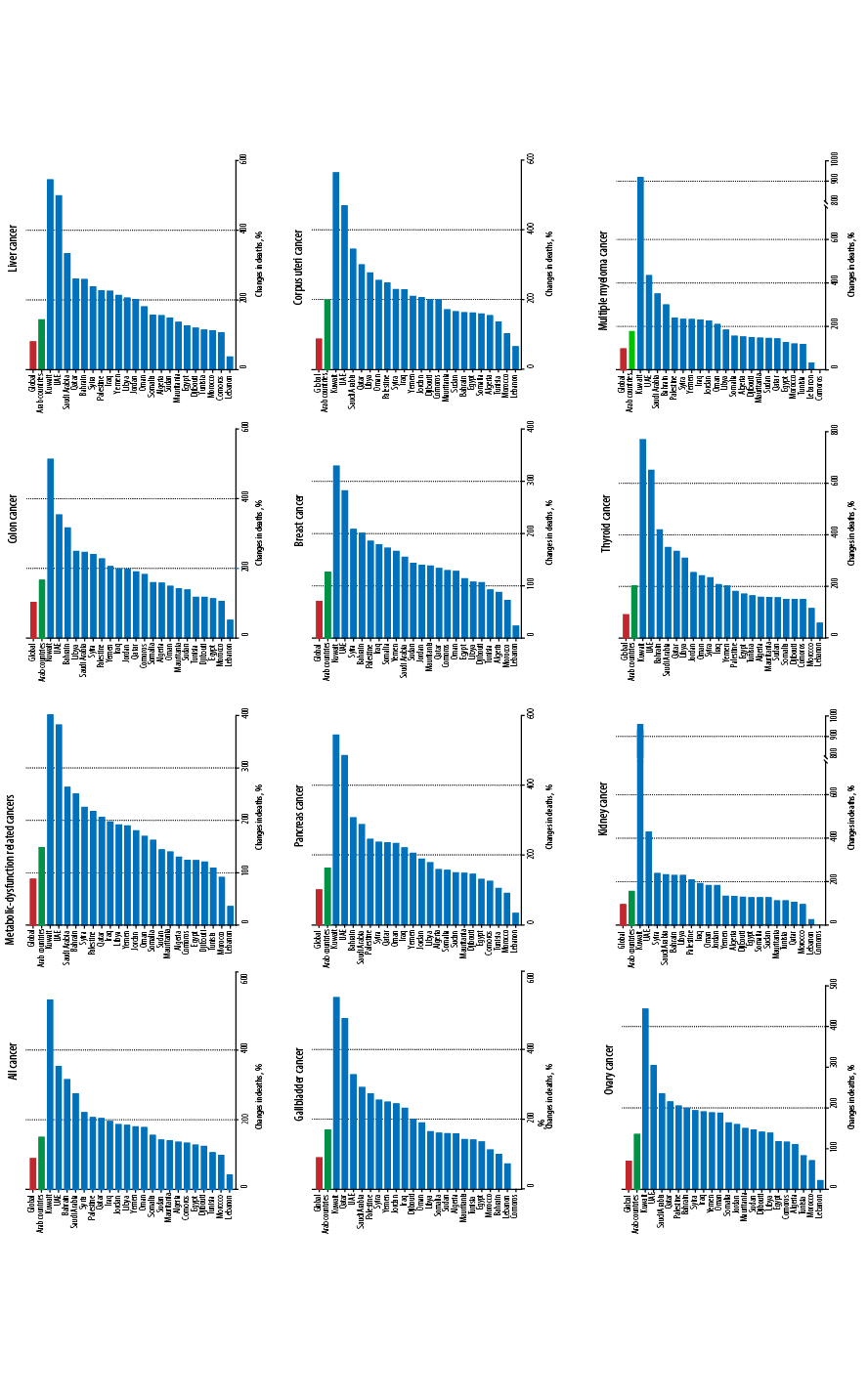 Male breast cancer data not included. Projections for Gulf Cooperation Council countries include both citizens and expatriate resident populations.
Figure 4: Projected percentage change in deaths by 2050 for all cancers, all metabolic dysfunction-related cancers combined, and individual metabolic dysfunction-related cancers—colon, liver, gallbladder, pancreatic, breast, corpus uteri, ovarian, kidney, thyroid, and multiple myeloma cancers—across the globe and in the 22 Arab League countries.
For individual cancer types, thyroid cancer mortality is projected to increase in Kuwait (+770.4%), the UAE (+651.1%), and Bahrain (+420.0%), significantly exceeding the projected global average increase (+91.0%). For colon cancer mortality, several Arab countries, particularly Kuwait (+513.8%), the UAE (+354.2%), and Bahrain (+316.9%), are expected to see disproportionately higher increases than the global average (+103%). Similarly, in liver cancer mortality, Kuwait (+545.8%) and the UAE (+500.0%) are expected to show exceptionally high increases, consistent with incidence trends and surpassing the global average (+80.8%). Additionally, disproportionately high projected increases in pancreatic cancer mortality are also expected in Kuwait (+544.8%), the UAE (+486.1%), and Bahrain (+307.4%).
Discussion
Studies have shown that the overall cancer burden in the Arab countries—as indicated by ASIRs and ASMRs—is generally lower than the global averages. However, certain metabolic dysfunction-related cancers, such as breast and liver cancers, exhibit higher rates than the global average. Due to higher birth rates and rising longevity in some countries of the region, especially in North Africa, the region is likely to experience a substantially larger increase in the burden of metabolic dysfunction-related cancers by 2050, surpassing global rates.
Our results indicate that cancers linked to metabolic dysfunction account for nearly half of the cancer burden in the Arab countries. In this category, breast cancer alone represents 43.7% of the burden and 30.2% of the deaths. The prominence of breast cancer in this region should be interpreted in the context of known barriers to early detection, including a cultural resistance to screening programs, breast health awareness, and breast self-examination. A recent meta-analysis has revealed that Arab women with breast cancer tend to present at younger ages and at more advanced stages.13 Addressing these barriers should be prioritized in regional cancer control strategies.
Liver and colon cancers are second and third in incidence. They are also lifestyle-linked and show variations between subregions and countries. For example, liver cancer is concentrated in North Africa, whereas colon cancer burden is more prominent in several GCC and North African countries, reflecting differing risk factor profiles and surveillance capacity.
The Arab region is experiencing rapid economic and developmental changes that are impacting lifestyles, particularly in dietary habits and physical activity, due to urbanization and the adoption of more sedentary behaviors.14 Currently, 10 of the world’s top 15 countries for obesity are in this region, with over 50% of women in Kuwait, Qatar, and Libya categorized as overweight or obese.7 Additionally, 38.5% of Arab adults lead a sedentary lifestyle, surpassing the global average of 31.3%.15
Consistent with this metabolic risk profile, the International Diabetes Federation Diabetes Atlas (2021) reports that the Middle East and North Africa region, despite representing only about 6.3% of the world population, carries 16.2% of the global burden of type 2 diabetes.13 Also, the Middle East and North Africa diabetic population is projected to increase from 73.0 million to 135.7 million by 2045.16 These metabolic risk patterns, in addition to the high birth rates in the North African subregion and Yemen, likely contribute to the rising incidence of metabolic dysfunction-related cancers in the region.
Furthermore, the Arab region is on the brink of an unprecedented demographic transition. In the GCC countries and Libya, rapid economic growth, urbanization, sedentary lifestyles, and calorie-rich diets have contributed to high obesity prevalence and metabolic risk. In contrast, several non-GCC Asian Arab countries such as Yemen and Syria face constraints related to conflict, displacement, and disrupted health services, which may hinder sustained prevention and early detection efforts. North African countries have mixed challenges, including high population growth, socioeconomic and cultural barriers, and uneven access to healthcare, cancer screening and treatment. These subregional differences call for tailored strategies rather than a uniform regional approach. As healthcare systems improve, the number of older adults is expected to increase.17 This aging population will significantly increase the burden of metabolic dysfunction-related and other cancers in the Arab region over the coming decades. Countries will face a growing demand for diagnostic services and treatment facilities, which may overwhelm existing healthcare systems, particularly those with limited resources.18,19
Our projections indicate a concerning upward trend in the number of new metabolic dysfunction-related cancer cases and deaths in the Arab region. By 2050, new cases are expected to rise faster than the global projection (119.4% vs. 66.3%) and deaths by 148.4% against 88.3% globally. The highest increases are anticipated in the GCC countries, especially Kuwait, the UAE, and Qatar, in most cancer types. However, the 2050 GCC projections should be taken cautiously because about 55% of the total GCC population are expatriate residents whose long-term presence cannot be predicted as reliably as that of citizens.
Addressing the projected rise in metabolic dysfunction-related cancers will require strengthening healthcare systems, scaling preventive measures, and improving coordination across countries. Expanding access to early detection and care is critical.1,20 A strong focus on prevention is pivotal, as a significant proportion of this burden could be avoided by controlling modifiable metabolic risk factors, since improving metabolic health is linked to lower cancer risk.21 Regional responses should therefore prioritize metabolic health and public policies aimed at controlling obesity and promoting healthier lifestyles. Regional responses should prioritize metabolic health and public policies aimed at controlling obesity and promoting healthier lifestyles, while recognizing the marked heterogeneity across Arab subregions.
Prioritizing the prevention of adolescent obesity is crucial, with pharmacotherapy and surgical options available for those at the highest risk in adulthood.22,23 This can include limiting children’s exposure to unhealthy food advertising, clear nutrition labeling, and encouraging physical activity from early childhood, especially among girls. Such interventions can lower the risk of metabolic dysfunction-related cancers.24,25 Engaging in physical activity boosts metabolic health and lessens the risks associated with metabolic dysfunction. This improvement is linked to better insulin sensitivity, reduced chronic inflammation, and alterations in gut microbiota, all of which are factors associated with metabolic dysfunction and cancer development.26,27
Public awareness of the connection between metabolic health and cancer risk remains low,28,29 so health promotion efforts should include this information. Building community support and engagement is vital for the successful adoption of these policies. Clear targets and investment in effective interventions are essential for improving
health outcomes.
This study has several important limitations. First, the 2022 estimates and 2050 projections are derived from modeled GLOBOCAN data rather than uniformly high-quality, population-based cancer registries, and the underlying data completeness varies substantially across Arab countries. In settings with limited registry coverage, estimates rely partly on statistical modeling and extrapolation, which introduces uncertainty. Second, projected cancer burdens are dependent on GLOBOCAN data sourced from incidence data collected by population-based cancer registries worldwide12; demographic projections from other sources such as World Health Organazation could yield materially different future estimates. Third, the analysis is ecological and descriptive and does not incorporate country-specific differences in screening uptake, diagnostic capacity, competing mortality, or future changes in metabolic risk prevalence. Fourth, intraregional heterogeneity, such as differences in socioeconomic development, conflict-related health system disruption in some countries, and rapid lifestyle transitions in the GCC states, may not be fully captured by the aggregated projections. Fifth, the 2050 projections are based on population alone and not on ASIR/ASMR trends, which may limit their epidemiological utility. Sixth, GLOBOCAN reports only female breast cancer, while a systematic review found higher-than-global rates of male breast cancer in Arab countries (~1-4% vs. global 1%).30
Finally, a major limitation of this study concerns the interpretation of GCC-specific estimates and projections. For GCC countries, both the 2022 estimates and 2050 projections include all residents, though citizens constitute only approximately 45% of the resident population. Including expatriate populations may bias GCC estimates for 2050 because expatriates may have different healthcare pathways, screening access, disease ascertainment, and long-term population trajectories. Most expatriate residents are contract workers and their families, and their future population size and composition are uncertain. Moreover, many of them are non-Arabs; therefore, estimates based on all GCC residents may not fully represent the cancer burden among Arab populations. Because GLOBOCAN does not separate national and nonnational populations, GCC-specific estimates and projections should be interpreted with particular caution.
In view of these limitations, the reported figures (especially for the GCC states) should be interpreted as broad planning estimates rather than precise forecasts. Continued strengthening of national cancer registries and periodic updating of projections using locally observed data will be essential to refine the regional cancer burden.
Conclusion
Cancers linked to metabolic dysfunction currently account for nearly half of cancer cases in the 22 Arab countries (44%) and drive a substantial share of cancer deaths. Our projections indicate a marked rise by 2050 — incidence increasing by 119.4% and mortality by >140% in the region. These findings underscore an urgent need for coordinated, multisectoral action: strengthen cancer surveillance and national registries (including disaggregation of national vs nonnational populations in GCC states), prioritize prevention of metabolic risk (obesity, diabetes, physical inactivity) through fiscal, regulatory and community interventions, expand early detection and treatment capacity, and tailor policies to subregional epidemiology. With timely investment in prevention, surveillance, and health-system capacity, a large proportion of this future burden may be avoidable. Without such investment, the Arab region is likely to face a rapidly rising and costly cancer challenge by midcentury.
Disclosure
The authors declare no conflicts of interest. No funding was received for this study. Full source data used in this study are publicly available from the GLOBOCAN website: https://gco.iarc.who.int.
references
- Soerjomataram I, Bray F. Planning for tomorrow: global cancer incidence and the role of prevention 2020-2070. Nat Rev Clin Oncol 2021 Oct;18(10):663-672.
- 2. Sung H, Ferlay J, Siegel RL, Laversanne M, Soerjomataram I, Jemal A, et al. Global cancer statistics 2020: GLOBOCAN estimates of incidence and mortality worldwide for 36 cancers in 185 countries. CA Cancer J Clin 2021 May;71(3):209-249.
- 3. Karra P, Winn M, Pauleck S, Bulsiewicz-Jacobsen A, Peterson L, Coletta A, et al. Metabolic dysfunction and obesity-related cancer: Beyond obesity and metabolic syndrome. Obesity (Silver Spring) 2022 Jul;30(7):1323-1334.
- 4. Naaman SC, Shen S, Zeytinoglu M, Iyengar NM. Obesity and breast cancer risk: the oncogenic implications of metabolic dysregulation. J Clin Endocrinol Metab 2022 Jul;107(8):2154-2166.
- 5. Liu Z, Lin C, Suo C, Zhao R, Jin L, Zhang T, et al. Metabolic dysfunction-associated fatty liver disease and the risk of 24 specific cancers. Metabolism 2022 Feb;127:154955. .
- 6. Pati S, Irfan W, Jameel A, Ahmed S, Shahid RK. Obesity and Cancer: A Current Overview of Epidemiology, Pathogenesis, Outcomes, and Management. Cancers (Basel) 2023 Jan;15(2):485. .
- 7. Fouad Y, Pan Z, Mostafa AM, Eslam M. Metabolic dysfunction-associated fatty liver disease: A key player in colorectal cancer development and progression. World J Meta-anal 2026;14(1):113789 .
- 8. Pan Z, Al Hassani A, Ismail MH, AlNaamani KM, Altarrah MY, Derbala M, et al. Changing profile and burden of hepatocellular carcinoma in Arab Countries in 1990-2021. Ann Hepatol 2025;30(2):102104.
- 9. Pan Z, Fouad Y, Abaalkhail F, Al Hassani A, Altarrah MY, Derbala M, et al. The burden of metabolic diseases in the Arab region, 1990-2021. Ther Adv Endocrinol Metab 2025 Dec;16:20420188251406531.
- 10. Mansour R, Al-Ani A, Al-Hussaini M, Abdel-Razeq H, Al-Ibraheem A, Mansour AH. Modifiable risk factors for cancer in the middle East and North Africa: a scoping review. BMC Public Health 2024 Jan;24(1):223.
- 11. Shiha G, Alswat K, Al Khatry M, Sharara AI, Örmeci N, Waked I, et al. Nomenclature and definition of metabolic-associated fatty liver disease: a consensus from the Middle East and north Africa. Lancet Gastroenterol Hepatol 2021 Jan;6(1):57-64.
- 12. Filho AM, Laversanne M, Ferlay J, Colombet M, Piñeros M, Znaor A, et al. The GLOBOCAN 2022 cancer estimates: Data sources, methods, and a snapshot of the cancer burden worldwide. Int J Cancer 2025 Apr;156(7):1336-1346.
- 13. Elhadi YA, Al-Rifai RH, Elbarazi I, Suliman A, Alabass SO, Abufatima IO, et al. Prevalence of advanced-stage breast cancer at diagnosis in Arab countries: A systematic review and meta-analysis. Cancer Epidemiol 2025 Dec;99:102930.
- 14. Miller V, Webb P, Cudhea F, Shi P, Zhang J, Reedy J, et al; Global Dietary Database. Global dietary quality in 185 countries from 1990 to 2018 show wide differences by nation, age, education, and urbanicity. Nat Food 2022 Sep;3(9):694-702.
- 15. Strain T, Flaxman S, Guthold R, Semenova E, Cowan M, Riley LM, et al; Country Data Author Group. National, regional, and global trends in insufficient physical activity among adults from 2000 to 2022: a pooled analysis of 507 population-based surveys with 5·7 million participants. Lancet Glob Health 2024 Aug;12(8):e1232-e1243.
- 16. Sun H, Saeedi P, Karuranga S, Pinkepank M, Ogurtsova K, Duncan BB, et al. IDF Diabetes Atlas: Global, regional and country-level diabetes prevalence estimates for 2021 and projections for 2045. Diabetes Res Clin Pract 2022 Jan;183:109119.
- 17. Khraif RM, Salam AA, Elsegaey I, AlMutairi A. Changing age structures and ageing scenario of the Arab world. Soc Indic Res 2015;121:763-785.
- 18. Kronfol NM. Delivery of health services in Arab countries: a review. East Mediterr Health J 2012 Dec;18(12):1229-1238.
- 19. Monsef N, Suliman E, Ashkar E, Hussain HY. Healthcare services gap analysis: a supply capture and demand forecast modelling, Dubai 2018-2030. BMC Health Serv Res 2023 May;23(1):468.
- 20. Eslam M, Ahmed A, Després JP, Jha V, Halford JC, Wei Chieh JT, et al. Incorporating fatty liver disease in multidisciplinary care and novel clinical trial designs for patients with metabolic diseases. Lancet Gastroenterol Hepatol 2021 Sep;6(9):743-753.
- 21. Marino P, Mininni M, Deiana G, Marino G, Divella R, Bochicchio I, et al. Healthy lifestyle and cancer risk: modifiable risk factors to prevent cancer. Nutrients 2024 Mar;16(6):800.
- 22. Aminian A, Wilson R, Al-Kurd A, Tu C, Milinovich A, Kroh M, et al. Association of bariatric surgery with cancer risk and mortality in adults with obesity. JAMA 2022 Jun;327(24):2423-2433.
- 23. Playdon MC, Hardikar S, Karra P, Hoobler R, Ibele AR, Cook KL, et al. Metabolic and bariatric surgery and obesity pharmacotherapy for cancer prevention: current status and future possibilities. J Natl Cancer Inst Monogr 2023 May;2023(61):68-76.
- 24. Eslam M, Alkhouri N, Vajro P, Baumann U, Weiss R, Socha P, et al. Defining paediatric metabolic (dysfunction)-associated fatty liver disease: an international expert consensus statement. Lancet Gastroenterol Hepatol 2021 Oct;6(10):864-873.
- 25. Fischer NM, Duffy EY, Michos ED. Protecting our youth: support policy to combat health disparities fueled by targeted food advertising. J Am Heart Assoc 2021 Jan;10(1):e018900.
- 26. Wang Q, Zhou W. Roles and molecular mechanisms of physical exercise in cancer prevention and treatment. J Sport Health Sci 2021 Mar;10(2):201-210.
- 27. Li C, Zhang J, Pan P, Zhang J, Hou X, Wang Y, et al. Humanistic health management and cancer: associations of Psychology, Nutrition, and Exercise with Cancer progression and pathogenesis. Adv Sci (Weinh) 2024 Jun;11(22):e2400665.
- 28. Alanzi TM, Alzahrani W, Albalawi NS, Allahyani T, Alghamdi A, Al-Zahrani H, et al. Public awareness of obesity as a risk factor for cancer in central Saudi Arabia: feasibility of ChatGPT as an educational intervention. Cureus 2023 Dec;15(12):e50781.
- 29. Hooper L, Anderson AS, Birch J, Forster AS, Rosenberg G, Bauld L, et al. Public awareness and healthcare professional advice for obesity as a risk factor for cancer in the UK: a cross-sectional survey. J Public Health (Oxf) 2018 Dec;40(4):797-805.
- 30.EEl Sett, P, Jammal, G, El Sett, A, Elkaddoum, R Kourie, H. Breast cancer in men: a systematic review of the literature from the Arab world. Int J Oncol Res 2022;5:042.